






















'Political pressure is visible on films like Dhurandhar':Actress Nafisa speaks on cinema politics; Nassar says, 'Breakup isn't life's end'
Does life end after a breakup? Should someone stay in an abusive relationship just because it is a relationship? Actor Nassar and actress-social activist Nafisa Ali addressed these questions in an interview with Dainik Bhaskar while promoti...

E
Entertainment
NEWS CARD

“'Political pressure is visible on films like Dhurandhar':Actress Nafisa speaks on cinema politics; Nassar says, 'Breakup isn't life's end'”

Read more on
en.mttvindia.com
14 Jul 2026
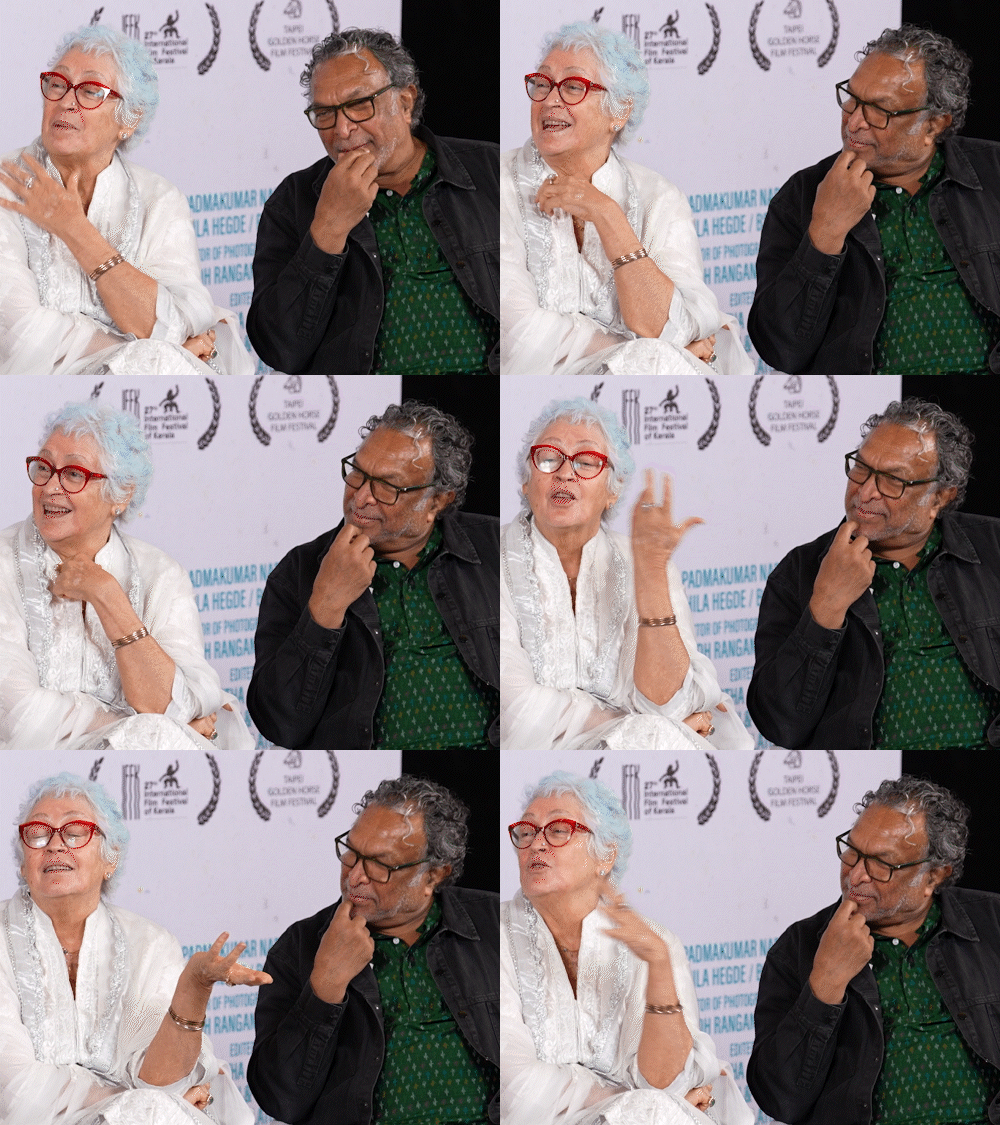
Does life end after a breakup? Should someone stay in an abusive relationship just because it is a relationship? Actor Nassar and actress-social activist Nafisa Ali addressed these questions in an interview with Dainik Bhaskar while promoting their film Max, Min and Meowzaki. Nassar said that the end of a relationship does not mean the end of life. He stressed the importance of commitment in relationships and encouraged people to seek therapy without hesitation whenever needed. Nafisa Ali, meanwhile, urged young people to learn to love themselves and walk away from abusive relationships. She also highlighted the importance of health and life insurance for every family. Speaking about the film industry, Nafisa said that action and violence have increasingly replaced romance and music in today's cinema. She also claimed that political pressure is clearly visible on films like Dhurandhar, adding that young people should understand the changing politics of cinema. When you heard the story of the film 'Max, Min and Meowzaki', what was it that immediately compelled you to say yes? Nassar: After hearing the story, I felt that it was not the story of a film, but the story of people I know in my life. Every character felt real. There was no artificiality or drama anywhere. Everything was as natural as life. I felt that I could see a glimpse of myself and my son in this story. That's why I immediately said yes to the film. Why did you choose this film? Nafisa Ali: My first reaction was that I wouldn't be able to do the film, because at that time I was battling cancer. But Padmakumar showed faith in me and narrated the entire story. After listening to the story, I felt that this is today's reality. The majority of India's population is under 28 years of age. The youth need to understand that they also have a responsibility towards their parents and elders. Parents do everything for their children throughout their lives, but today, many children move away due to studies, jobs, and other reasons. Sometimes they don't even have time for their parents. This film is a story of heart, soul, and caring for each other. I felt that this could also be the story of my life. That's why I did this film. Relationships form quickly and break quickly among today's youth. How do you view communication gaps, lack of patience, and changing mindsets? Nafisa Ali: I remember my childhood. I have also loved a lot and had my heart broken many times. But I want to tell young people that if your heart breaks, don't think that life is over or that you won't find love again. Don't destroy yourself because of a breakup. Don't go towards addiction, don't ruin your health, and don't distance yourself from family. Life is very beautiful and there is definitely a right partner for every person. First, learn to love yourself. If you love yourself, life won't stop if someone leaves. Let those who break your heart and leave go. You are most important to yourself. What is the biggest difference you see between today's relationships and relationships of the past? Nassar: I agree with Nafisa. The nature of relationships has changed in every era. There is a big difference between the love stories of the 1960s and today's films. Earlier, women were portrayed in a certain way, but now their role is stronger and more independent. This is a good change. Today's youth generation has more freedom than before. But now breakups are being taken very lightly. Earlier, its pain was felt for a long time, but now many people move on quickly. Moving on is not wrong, but if repeatedly forming and breaking relationships becomes a habit, then it is a cause for concern. Even if a relationship ends, life doesn't stop. Focus on your dreams and career, but never forget the importance of commitment. Today, in films, action and violence are seen more often instead of romance and music. What do you think is the reason for this? Nafisa Ali: Our films were once known for love, relationships, and music. But now the impact of action and violence is more visible. People are repeatedly watching such films, but the question is, how many times can violence ultimately be watched? I don't entirely blame the filmmakers, but they also have a responsibility towards society. They should think about what kind of message they are conveying to the audience. Do films influence society, and what message would you give to people facing violence in relationships? Nafisa Ali: Films and society strongly influence each other. Today, political ideologies are increasingly shaping cinema, and young people must think independently instead of being influenced by any narrative. They should question whether their thinking is moving in the right direction. On the issue of domestic violence, Nafisa said no one should stay silent. If someone is facing abuse in a relationship, they should seek help through available support systems and speak up. A person who is violent does not deserve to be in your life, and leaving such a relationship is the right choice. Did the father-son bond in Max, Min and Meowzaki remind you of your own father and son? Nassar: Absolutely. I never dreamed of becoming an actor. I came from a humble family, and back then, securing a small job was my biggest aspiration. But it was my father who encouraged me to pursue acting, and whatever I am today is because of him. When I once asked why he had pushed me towards acting, he admitted he didn't know. While portraying the father-son relationship in the film, I was reminded of both my father and my own son. Many scenes felt deeply personal, making the experience less like acting and more like reliving my own life. Nafisa , you fought a serious illness like cancer. How important is family support at such a time? Nafisa Ali: Family support is very important. I would like to tell everyone that every person should have health insurance and life insurance. With a little saving every month, family security can be ensured. Life is unpredictable. No one knows when a difficulty might arise. Medical treatment in our country is very expensive. The government helps, but often it's not enough. Therefore, every family should be prepared in advance, so that when illness strikes, financial worries don't become the biggest concern. How important do you consider friendship and therapy in life? Nassar: As one gets older, the importance of a true friend increases. A friend in front of whom you can express everything on your mind without fear, whether it's relationship problems, family stress, or any other difficulty. But when needed, therapy is also very important. My wife is a psychologist, so I understand this well. If there is a mental problem, there should be absolutely no hesitation in seeking help from an expert. This is not weakness, but wisdom.